Loaded Walks, Not Long Shifts: Building Strength Between Home and Platform
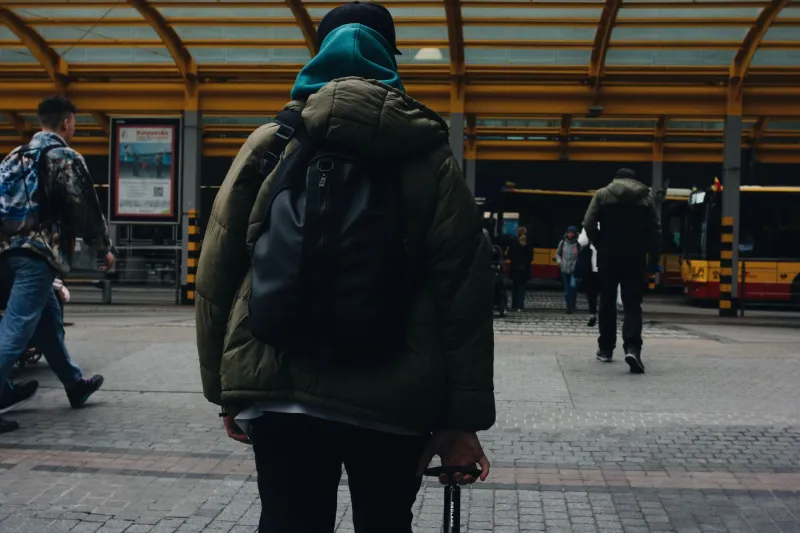
Most strength plans quietly assume you have a spare hour and a rack of plates. Most commutes assume you have a rucksack, a wet bus stop and eleven minutes. Oddly, that second scenario is a training session that has been sitting there the whole time.
Loaded carries — walking while wearing or holding something heavy — are about as old as hauling things. Farmers did not call them farmer's walks; they just carried stuff and got quietly robust. The gym borrowed the idea and, as gyms do, complicated it. You can keep it simple.
Why walking with weight earns its place
Three things happen when you walk with a load: your grip works, your trunk braces, and your feet and calves do a surprising amount of overtime. None of that is glamorous, and all of it shows up in real life — the weekly shop, a sleeping toddler, a laptop bag on a crammed Northern line service, moving a mate's sofa.
It is also low-skill and low-soreness compared with a heavy squat session, which means you can do it on a Tuesday without writing off Wednesday. For anyone juggling a job, a family and a genuine dislike of the gym at 6am, that is not a minor detail.
Start by weighing what you already carry
Put your everyday bag on the kitchen scales. Laptop, charger, water bottle, lunch, the paperback you never read — plenty of people are already walking around with four to six kilos and calling it 'nothing'. That is your starting load, and it is a perfectly respectable one.
To add weight cheaply and tidily: a 1.5-litre bottle of water is about 1.5kg, a bag of rice is a kilo for a few quid, and a folded towel stops either from digging into your back. Aim to add load in small, boring increments rather than one heroic leap.
Grip: the bit everyone skips
If you wear a rucksack, your grip is not the limiter, so add some hand carrying. A heavy shopping bag in one hand, a suitcase-style carry in the other, then swap sides every 60 to 90 seconds. Hold the handle firmly but do not strangle it — a white-knuckle grip tells you the load is too heavy for the distance you have chosen.
Single-sided carrying is worth practising deliberately. It teaches your trunk to resist leaning, which is exactly what happens when you are lugging two bags and a pint of milk home.
Posture: tall, not stiff
Ribs stacked over hips, chin level, eyes on the pavement three or four metres ahead. With a rucksack, tighten the sternum strap and sit the load high between your shoulder blades rather than sagging towards your backside.
Avoid the two classics: the forward fold (leaning like you are climbing a hill in wind) and the shoulder hitch (one strap, one hip, one long-term niggle).
Pace is the whole programme
Use the talk test. Full sentences comfortably means you are going too easy for the main block. Short phrases means you are working. Single words means back off. Aim for a brisk walk — the pace you would walk if you were five minutes late but did not want to arrive sweaty.
A four-week progression that fits round a commute
- Week 1: Two 10-minute carries, twice in the week. Rucksack plus one shopping bag. Same route you always walk.
- Week 2: Same duration, add 1.5–2kg, or keep the weight and add a third carry. Do not do both.
- Week 3: Stretch to 15 minutes. Include a slope, a station staircase or the long way round the car park.
- Week 4: One 20-minute carry, or split it — ten minutes to the station, ten minutes home — which is often more realistic.
Progression rule: if the last two minutes feel about the same as the first two, add weight or time next week. If your posture collapses into a shuffle, hold the load where it is and add a minute instead. Slow beats heroic.
Making it survive November
Dark by half four, wet leaves, ice on the pavement. Get a reflective tab or a cheap high-vis cover for the bag, keep the load under about 10% of your body weight on dark, slippy walks, and swap to paths you know rather than a muddy shortcut. Gloves reduce grip strength, so drop the weight a notch when you are wearing them. If your bag is not waterproof, a bin liner inside costs nothing and has saved more laptops than any warranty.
The school gate and the station are free gyms
Park a ten-minute walk further out. Get off a stop early. Walk the long way to the school gate with the bag you would otherwise sling in the boot. Three of those a week, done for a month, add up to several hours of loaded walking that never once felt like exercise.
When to leave the weight at home
Lower back grumbles that last more than a day, a pinch at the front of the shoulder, tingling or numbness in the fingers, or any dizziness — drop the load by a fifth and walk unloaded for a week. Anything sharp, one-sided or getting worse should go to a GP or physio rather than a training plan.
What you are actually training for
Not a competition, not a photo. You are training for the Tuesday when the lift is broken and you have got two bags of shopping and a hill. That is real strength, and it costs nothing but the walk you were already doing.