A Pint and a Plan: Social Eating Without the All-or-Nothing Trap
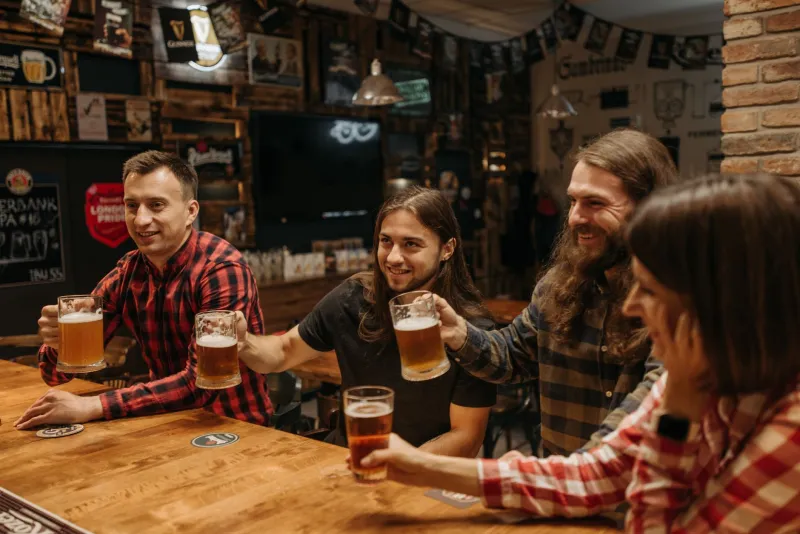
Let's start with the obvious: a pub lunch is not a moral test. Neither is a pint, a Sunday roast, a birthday curry or the chips your mate ordered for the table. If you train regularly and eat reasonably well most of the time, one social meal won't derail anything. The bigger risk is the story you tell yourself afterwards—the one where you've 'blown it' and might as well write off the week.
The week matters more than the meal
Nutrition for training isn't a courtroom. You don't need to prove your commitment by ordering the plain chicken breast. Look at your week as a whole. Are you getting protein with most meals? Some fruit and veg? Enough food to train and recover? Then a pub dinner is just dinner. The 80/20 approach isn't a loophole; it's how normal people stay consistent.
Reading a pub menu without being that person
You don't have to announce your protein goals to the table. Just scan for a decent anchor and build around it. Roast chicken, gammon, steak, fish, halloumi, a burger or a mixed grill all give you something to work with. Then add veg or a side that makes the meal enjoyable. Chips are allowed. So is gravy.
At a carvery, go for a proper serving of meat, pile on the veg, and take one Yorkshire pudding if you want it. Sunday roast? Same principle. Curry house? Tandoori chicken or chicken tikka, a dal, some rice and a shared naan is a solid plate. Fish and chips? Enjoy the fish, add mushy peas, and share the chips if you're not that hungry. The point isn't to find the lowest-calorie option; it's to leave feeling fed, not deprived.
The pint question
Alcohol isn't a fitness crime, but it does have a cost. It can affect sleep quality, hydration, recovery and appetite—and a few pints can make tomorrow's session feel harder than it needs to. That doesn't mean you can't drink. It means you choose when it's worth it.
Practical stuff: eat something with protein before you go out. Alternate a pint with water or a soft drink. Try a half if you mainly want the ritual. Choose a lower-ABV option if you're pacing yourself. Set a soft limit before you arrive, not after the third round. And don't drink to keep up with anyone. A pint is not a personality test.
Scripts for the round
Friends can be brilliant and also weirdly invested in your glass. You don't owe anyone a detailed explanation. Try these:
- 'I'm on a lime and soda for this one, but I'll get the next round.'
- 'I'm driving, so I'm on soft drinks tonight.'
- 'I'm taking it easy—got a session in the morning.'
- 'I'll have a half, thanks.'
- 'I'm good, thanks.' (This is a complete sentence.)
If someone pushes, repeat the same line and change the subject. You can also offer to be designated driver now and then, which removes the pressure entirely. If you are drinking, own it. If you're not, own that too. The aim is to enjoy the people, not to perform a wellness identity.
The day after
Don't punish yourself with a brutal session or skip breakfast to 'make up' for it. Drink water, eat something with protein and get outside for a gentle walk if you can. If your training feels heavy, reduce the intensity or do a shorter session. One night out doesn't require a penance workout. It requires a return to normal at the next meal.
Alcohol can leave you dehydrated and a bit flat, so water and electrolytes before bed are sensible. Sleep is the real recovery tool. If you had a big one, treat the next day as a recovery day rather than a test of character.
Consistency beats perfection
The people who get results aren't the ones who never go to the pub. They're the ones who go, enjoy it, and then get back to their normal habits. Plan around social events: have protein at breakfast and lunch, drink water during the day, don't arrive starving, and choose what you actually want. You're not 'being good' or 'being bad'. You're eating, drinking and living in the real world.
A pint and a plan can coexist. The plan just needs to be flexible enough to survive a pub garden in November—and a roast dinner in December.