One Towel, Thirty Minutes: A Beginner's Lunchtime Swim at the Council Pool
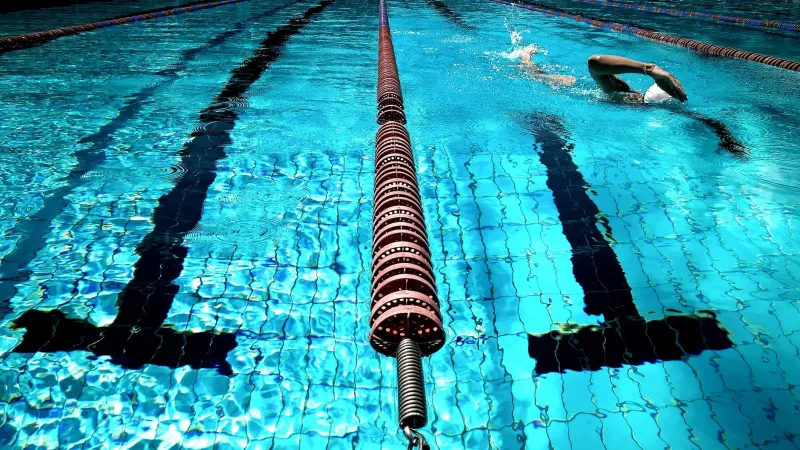
The first time you walk into a council pool at 12:15 on a Tuesday, the scene can look like a motorway with no signage. Three lanes, each with a different speed of traffic, a lifeguard on a tall chair, and a changing room that smells faintly of chlorine and hairspray. The trick is not to be fast. The trick is to be predictable.
Lunchtime lane swimming is one of the most accessible forms of training in the UK. It is also one of the easiest to talk yourself out of. The barriers are rarely about fitness. They are about kit, timing and the fear of getting in the wrong lane. This plan is designed to remove all three.
The kit list, stripped back
You do not need a triathlon bag. You need a small holdall and a routine. Pack it the night before and leave it by the door.
- Swimsuit — a comfortable one you can move in, not the one you bought for a holiday and never wore
- Towel — one microfibre towel is enough for most people; bring a second small one if you have long hair
- Goggles that do not leak (test them at home, not in the pool)
- Swimming cap if your pool requires one — check the website before you go
- Flip flops or pool shoes for the changing room floor
- A padlock that fits the lockers — many council pools sell them, but the queue at reception is not where you want to spend your lunch hour
- A £1 coin or trolley token if your pool uses coin-return lockers
- Small toiletries: body wash, deodorant, and a comb
- A plastic bag for wet kit
- A water bottle
Leave the laptop in the locker, not on the bench. Leave the big towel at home. Leave the idea that you need to look good doing this.
Choosing a lane without a trial run
Arrive five minutes early and watch from the poolside. You are not being nosy; you are reading the traffic.
The slow lane is usually the one nearest the shallow end or the one closest to the changing room door. It is also usually the one with the widest range of strokes and the most stopping. That is fine. That is where you belong for now.
Count the gap between swimmers at the wall. If someone is turning up every 25 seconds doing front crawl, that is not your lane. If people are doing head-up breaststroke and pausing to catch their breath, that is. If you are unsure, ask the lifeguard. They would rather point you to the right lane than fish you out of the wrong one.
Circle swimming is standard in most UK pools. Check the sign at the end of the lane — it will tell you whether to keep left or right. If there is no sign, watch which shoulder people are keeping to the wall and copy them. Enter the water gently. Do not bomb. Do not push off right behind someone. If you need to stop, stop at the wall, not in the middle of the length.
The 30-minute session
This is a simple structure for a 25-metre pool. It assumes you have about 50 minutes from leaving your desk to sitting back down. The swim itself is 30 minutes.
Warm-up (5 minutes): Two lengths easy, any stroke. Get your face in the water. Let your shoulders loosen. Do not race the person next to you.
Main set (20 minutes): Eight rounds of two lengths, with 30 seconds rest at the wall. That is 16 lengths, roughly 400 metres. If that feels like too much, do six rounds. If it feels easy, do ten. The rest is not cheating; it is what lets you keep your form.
Cool-down (5 minutes): Two lengths easy, then hold the wall and stretch your calves and shoulders for a minute. Climb out slowly.
Use whatever stroke keeps you moving. Breaststroke is fine. Front crawl is fine. A mix of both is fine. The only rule is that you keep the length moving and you let faster swimmers past at the wall.
The exit plan (the bit nobody talks about)
The swim is the easy part. The rush comes afterwards.
Allow ten minutes to change. Shower at the pool, not at home. Dry off in the cubicle, not on the poolside. Put your wet kit straight into the plastic bag before it touches your work clothes. Dress in this order: underwear, trousers, top, then hair. If you have a meeting at 1:30, a swimming cap and a quick rinse means your hair is damp, not dripping.
Keep a banana or a flapjack in your bag. The post-swim hunger is real, and the vending machine is not your friend.
Build in a buffer. If your lunch break is an hour, aim to be back at your desk with ten minutes to spare. If it is 45 minutes, shorten the main set to six rounds and skip the cool-down stretch. Do not book a 1pm meeting on a swim day until you have done it twice.
Three visits to make it normal
The first visit is not a workout. It is a reconnaissance mission. Get in, swim four lengths, get out. Learn where the lockers are and how the showers work. The second visit is the full session. The third visit is the one where you stop thinking about the lane and start thinking about your stroke.
After three visits, the logistics disappear. You stop noticing the echo of the changing room and start noticing that you have more energy at 3pm than you did before lunch.
Lane swimming is not a race. It is a shared piece of water and a 30-minute window in your day. Treat it like a meeting you actually want to attend.