Skip the Treadmill Queue: Seven Council Gym Machines Worth Learning This Winter
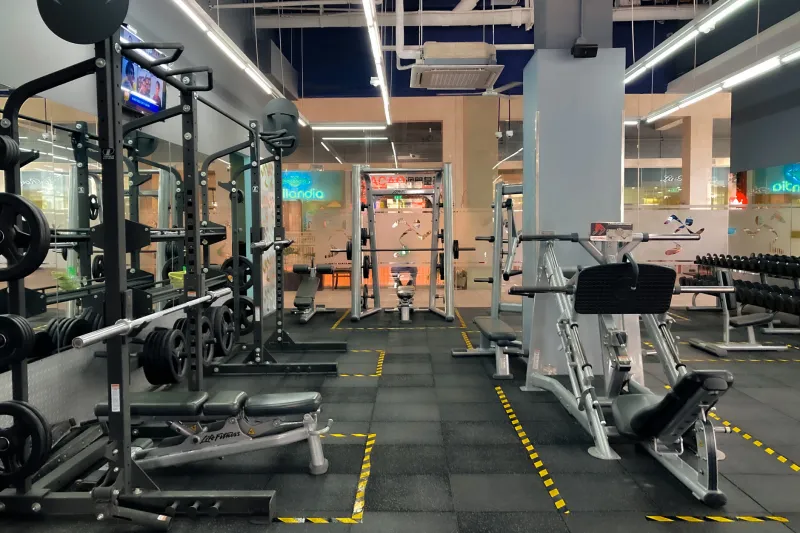
Walk into most council-run leisure centres on a dark November evening and the same scene plays out. Every treadmill is taken, there is a queue for the cross-trainers, and the resistance room is so quiet you can hear the pins settle. Somewhere in there sits a leg press with a folded towel on the seat, untouched since an induction back in September.
If you pay £25–£40 a month to a leisure trust — Better, Everyone Active, Places Leisure, whichever logo is above the door — you are entitled to use all of it. Not just the two machines you already know how to work. The seven below get walked past because nobody ever showed anyone what to do with them. So here is the showing.
Start with the two-minute rule
Before touching any of these: find the pin, set the seat so the joint you are working lines up roughly with the machine's pivot point, and start lighter than your ego suggests. Most council gyms will hand you a free induction or a programme review with a duty instructor. Book it, ask specifically about these seven, and you get a walkthrough without paying personal trainer rates.
1. Leg press
Setup: Back flat against the pad, feet shoulder-width on the platform, knees tracking over toes rather than collapsing inwards. Stop just short of locking out at the top — a soft knee is a happy knee.
Do: Three sets of 8–12 reps. If you can knock out twenty, add some weight.
Etiquette: Strip your plates afterwards. Nobody wants to unload your four 20s at seven in the evening.
Why bother: it is the closest thing to a squat for anyone whose knees, hips or lower back have opinions, and it teaches you to drive through the whole foot — which carries straight over to stairs, hills and heaving yourself up off the floor.
2. Chest press
Setup: Handles level with the middle of your chest, wrists straight, back on the pad.
Do: Three sets of 8–12, taking two or three seconds on the way back.
Etiquette: Wipe the handles. Everyone claims they do; most of us are lying.
This is the machine that stands in for the bench press you are never going to do unsupervised. It is stable, it is safe to fail on, and it works the pushing muscles you use for a pram, a trolley and a wheelie bin on a windy bin day.
3. Lat pulldown
Setup: Thigh pad snug, hands just outside shoulder width, a slight lean back.
Do: Three sets of 8–12, pulling the bar to your collarbone rather than behind your neck.
Etiquette: Let the stack down gently. The crash travels further than you think.
Pulling work is the first thing new gym-goers drop, and it is the first thing that complains when you spend nine hours a day at a desk. This is the friendliest place to start.
4. Seated cable row
Setup: Chest tall, knees softly bent, feet braced. Start with your arms long and your shoulders set, not hunched forward.
Do: Three sets of 10–12, squeezing your shoulder blades together at the end of each rep.
Etiquette: Do not lean back and heave. If your whole body is moving, the weight is too heavy.
The mirror image of the chest press, and the reason your posture stops resembling a question mark by February.
5. Assisted pull-up and dip
Setup: Here is the bit that confuses everyone — the pin sets how much help you get, not how much weight you lift. A bigger number means easier. Start with more assistance than you think you need.
Do: Three sets of 6–10 controlled reps. Over the weeks, nudge the pin down a plate at a time.
Etiquette: It is one machine with two stations. Do not camp on both while scrolling.
This is the honest middle ground between not being able to do a pull-up and giving up on ever doing one. It builds the confidence to eventually try the real thing on the bar by the mirrors.
6. The cable column
Setup: The adjustable pulley that looks like it was designed by an engineer having a bad day. Slide the carriage to the right height, pick a light weight, and stand side-on.
Do: Face pulls and Pallof presses, three sets of 10 each. The Pallof press — standing side-on and pushing the handle straight out from your chest — is the single best anti-rotation drill in the building.
Etiquette: Put the carriage back to a neutral height when you finish so the next person is not hunting for it.
Most machines only let you push and pull in one fixed line. This one lets you resist twisting, which is exactly what your midsection does every time you carry a child on one hip or lug shopping up a driveway.
7. Seated leg curl
Setup: Line your knee up with the pivot, pad sitting just above the heel, back pad adjusted so your hips stay put.
Do: Three sets of 10–15, slow and deliberate. Hamstrings respond well to control, badly to flinging.
Etiquette: Reset the back pad. It takes four seconds and saves someone an awkward fumble.
Hamstrings are the muscle group most people never train directly, and the one that tends to announce itself the day after a longer walk in cold weather.
Stringing them together in 35 minutes
You do not need a complicated split. Once a week, or twice if you can manage it: leg press, chest press, lat pulldown, seated leg curl, then a couple of sets on the cable column. Two working sets each, 8–12 reps, 60–90 seconds between. Add a small amount of weight whenever the top of the rep range feels comfortable rather than heroic. That is the entire programme, and it will do more for you between now and spring than another winter of treadmill-only sessions.
The unwritten rules that make you welcome
Re-rack what you take out, wipe down what you sweat on, and do not sit on a machine answering messages while others hover. If the place is rammed — post-work weeknights are the worst — cap yourself at twenty minutes on any one station. Nod at the regulars. Ask the duty instructor a question when you are stuck; that is what they are there for, and it is a far better use of your membership than another half hour on the bike you already know how to ride.
The point is not to become a gym person. It is to use the building you are already paying for, in a way that leaves you a bit stronger getting off the sofa in January than you were in October.