Reading the Numbers: Making Sense of Your NHS Health Check Before You Lace Up
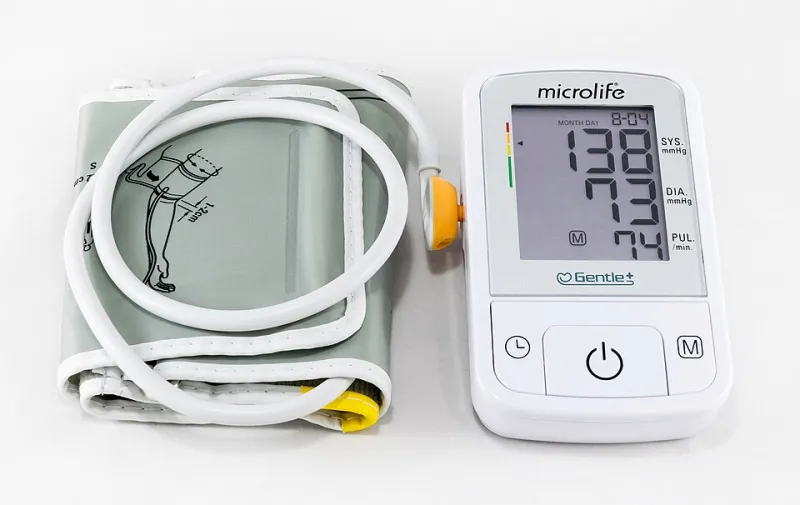
Photo: Jacek Halicki, CC BY-SA 4.0, via Wikimedia Commons
The letter turns up a few weeks before your fortieth birthday, or somewhere in the decades after it, and then a friendly healthcare assistant takes your blood and hands you a printout full of figures. It is not a diagnosis and it is not a verdict. It is a snapshot, and it is most useful when you know what you are looking at.
A quick note before anything else: this is general information, not medical advice, and it does not replace your GP. If you are on medication or have a diagnosed condition, the person who prescribed it is the one to ask about training intensity. Nothing below is designed to talk you out of that conversation.
What the check actually involves
In England, the NHS Health Check is offered to adults aged 40 to 74 every five years, usually at a GP surgery or a participating pharmacy. Scotland, Wales and Northern Ireland run their own versions with slightly different rules, so the details vary by postcode.
The appointment typically covers a family history questionnaire, height and weight, a blood pressure reading, and a blood test for cholesterol and HbA1c. Those inputs get fed into a risk calculator — most commonly QRISK3 — which estimates your chance of a cardiovascular event over the next ten years. That percentage is the number people fixate on, and it is arguably the least useful one in isolation.
Blood pressure: two numbers, one decision
A reading like 128/82 gives you a top figure (systolic) and a bottom figure (diastolic). Around 120/80 is often described as ideal; consistently at or above 140/90 in a clinic usually prompts a conversation; anything in between is often called raised. A single high reading in a rushed appointment proves very little — home monitoring over a week tells you far more.
What it means for training: regular aerobic exercise is part of the solution here, not part of the problem. Brisk walking, cycling, swimming and steady gym cardio all help. Build gradually rather than going from nothing to a punishing spin class, and breathe through effort instead of holding your breath under a heavy bar. If your readings are consistently very high — around 180/110 or above — get advice before you do anything strenuous, and skip maximal lifting and long breath-holds until someone clinical has looked at it.
Cholesterol: total is not the whole story
The printout usually shows total cholesterol, HDL, non-HDL and sometimes a ratio. Total cholesterol on its own can be misleading, because it lumps the helpful and less helpful carriers together. Non-HDL and the ratio tend to say more, and your risk score puts all of it in context alongside age, blood pressure and smoking status.
It is worth saying plainly: cholesterol is not created by one heavy weekend, and it will not be fixed by one gym session. Diet, body composition, genetics and medication all pull on it.
What it means for training: aerobic work has a modest effect on HDL and a useful one on triglycerides, but changes in body fat and diet generally move the needle more than any single workout. Resistance training earns its place because it helps you hold on to muscle while you change body composition — and muscle is metabolically useful.
HbA1c: blood sugar in plain English
HbA1c reflects your average blood glucose over roughly the last two to three months, measured in mmol/mol. Under 42 is usually described as normal. Between 42 and 47 is non-diabetic hyperglycaemia — what used to be called prediabetes. At 48 or above, your GP will want to investigate further, because that range is consistent with diabetes.
What it means for training: muscle is the biggest sink for glucose in your body, so using it regularly helps. A ten-minute walk after dinner is unglamorous and genuinely effective. Two resistance sessions a week builds the tissue that stores glucose. Short bursts of harder effort — a brisk incline, a few fast intervals — can help too, once you have a base. If you take insulin or a sulfonylurea, exercise can drop your blood sugar quickly, so carry something sugary, tell whoever trains you, and get specific advice from your diabetes team.
The risk score is a conversation, not a sentence
A ten-year risk of, say, 12% does not mean a 12% chance of dropping dead. It means that among a hundred people with your profile, roughly twelve would have a cardiovascular event in the next decade. It is deliberately blunt, it accounts for things you cannot change, and it exists to start a discussion about statins, smoking, blood pressure and lifestyle — not to tell you to sit still.
Push on, moderate, or ask first
- Push on: readings broadly in range, no symptoms, and a risk score that has not triggered treatment. Progress normally — add load, add cardio, add a session.
- Moderate: raised blood pressure, HbA1c in the 42–47 band, or cholesterol worth watching. Aim for around 150 minutes of moderate activity a week plus two strength sessions, build slowly, and avoid flat-out maximal efforts until you have had a review.
- Ask first: very high blood pressure, HbA1c at 48 or above, chest pain or breathlessness at rest, unusual palpitations, dizziness, a new prescription, or a strong family history of early heart disease. A phone call to the surgery costs ten minutes and settles it.
Repeat the numbers, not the vibes
Three months of consistent walking, two strength sessions a week and a bit less booze will do more for that printout than any supplement. Book a repeat test, write the date down, and compare like with like. Progress you can see in numbers is the most motivating thing in this whole article — far more than a scale or a mirror on a grey Tuesday in February.